Federal Pacific (Stab-Lok) Panels: Are They Dangerous?
Updated 2026-10-30
Federal Pacific Electric (FPE) Stab-Lok panels have a documented problem: their breakers may not trip when a circuit is overloaded. Testing between 1979 and 1983 found failures to trip in 14 to 74 percent of tests, according to a 2019 safety bulletin from insurer AmTrust, and the U.S. Consumer Product Safety Commission closed its investigation in 1983 without ever determining that the breakers are safe. There was no recall. If your house has one, have a licensed electrician evaluate it and price a replacement; AmTrust recommends replacing Stab-Lok panels and breakers with UL-listed equipment.
What the record shows
- June 1980: the CPSC opened an investigation after FPE’s parent company, Reliance Electric, reported that many FPE breakers did not fully comply with Underwriters Laboratories (UL) requirements. CPSC testing confirmed that the breakers failed certain UL calibration tests.
- 1982: Reliance acknowledged “a possible defect” in a Securities and Exchange Commission filing, according to AmTrust.
- 1983: the CPSC closed the investigation. Reliance had submitted data saying the breakers do not create a hazard in the household; the CPSC said it had too little data to accept or refute that, and that collecting more would cost several million dollars. A 2011 note on the same release says the Commission closed the matter “without making a determination” about the breakers’ safety.
- Testing for the CPSC: engineer Jesse Aronstein’s team found that 51 percent of the Stab-Lok breakers tested failed to trip (AmTrust).
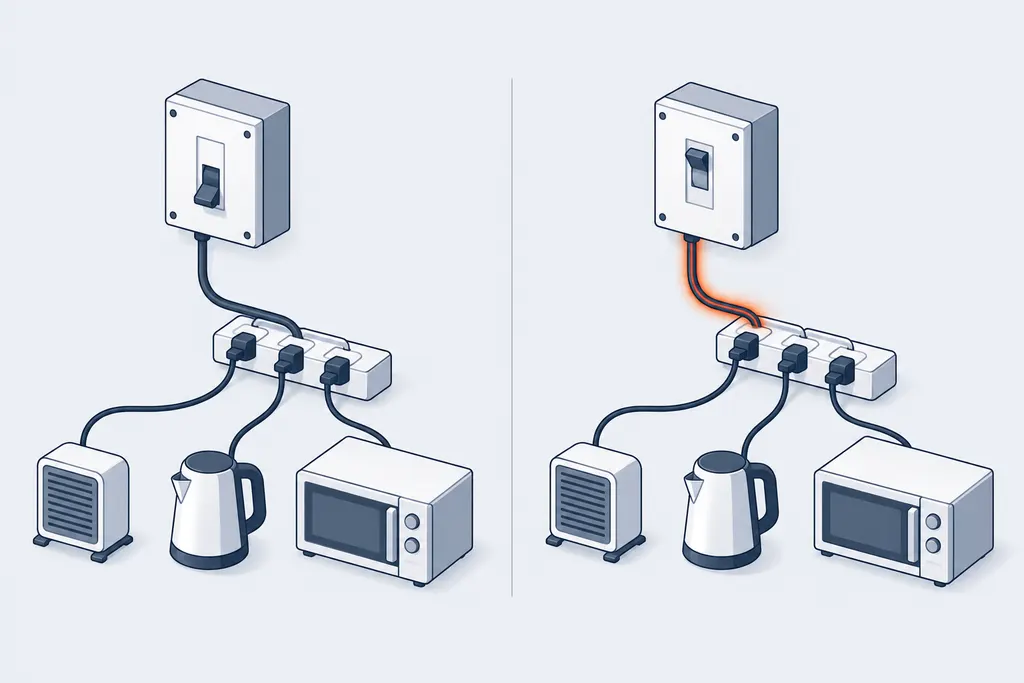
A breaker that doesn’t trip lets an overloaded circuit keep running, which can overheat wiring. That’s why the problem is invisible day to day: the panel works normally until the moment it needs to protect you.
How to tell if you have an FPE Stab-Lok panel
Look at the front of the panel and the label on or inside its door. Opening the hinged door is fine — it’s what you do to reset a breaker — but never remove the inner cover that sits around the breakers. Look for:
- “Federal Pacific Electric” or “FPE” on the door or label;
- the word “Stab-Lok” on the label.
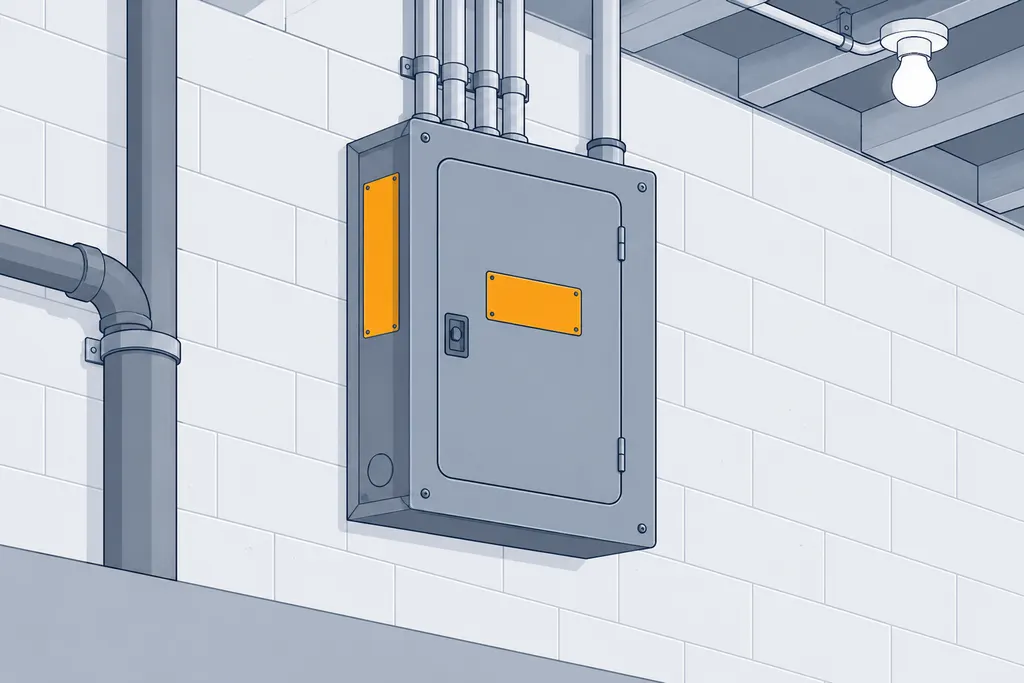
AmTrust says these panels were installed in homes built from 1960 to 1985. Stab-Lok-type products were also made under other names until about 1990, and as of AmTrust’s 2019 bulletin, Stab-Lok-type breakers were still sold under the names UBI and Federal Pioneer. If the label is missing or unreadable, an electrician can identify the panel during a visit. Our Panel Risk Check asks about the brand and warning signs.
Why replacing only the breakers isn’t recommended
AmTrust’s bulletin says replacing only the breakers is not recommended, even with UL-approved breakers: mixing breakers and panels of different brands isn’t covered by UL’s testing of the assembly, and there is evidence of overheating and a possible design flaw in the panel’s enclosure and bus bar.
Insurance and buying or selling a house
AmTrust recommends that all Federal Pacific Stab-Lok panels and breakers be replaced with UL-listed equipment. Other insurers set their own rules, so if you’re buying a house with an FPE panel, ask your insurer before closing whether it affects coverage or the premium. The inspection report and a written replacement quote give you something concrete to discuss with the seller.
What replacement costs
A panel replacement with installation typically costs $800–$1,500 for 100 amps, and most homeowners pay $1,300–$3,000 for 200 amps (This Old House, 2026). Permits, meter work or moving the panel add to that. See the full breakdown, with a second cost guide side by side, in Electrical Panel Replacement Cost.
What to do now
- Don’t remove the panel cover or try to test the breakers yourself.
- Don’t keep resetting a breaker that trips — the CPSC advises finding out why it trips.
- Don’t plug several high-power appliances into one circuit — the CPSC warns against overloading circuits.
- If the panel feels warm or buzzes, have a licensed electrician look at it soon. If you smell burning, see smoke, or the panel is hot to the touch, leave the area and call 911.
- Otherwise, book an evaluation and ask for a written replacement quote.
FAQ
Was there a Federal Pacific recall? No. The CPSC closed its investigation in 1983 without a recall and without determining that the breakers are safe.
Are all Federal Pacific products affected? AmTrust says the only reported failures are with Stab-Lok panels and breakers.
Is an FPE panel a reason not to buy a house? Not by itself — it is a known item that can be replaced. Get a written quote and check with your insurer before closing.
Illustrations on this page are AI-generated to help you picture the situation. They are not photos of real homes, jobs or people.
Sources
- U.S. CPSC — Commission Closes Investigation of FPE Circuit Breakers and Provides Safety Information for Consumers (1983, revised 2011)
- AmTrust North America — Safety Zone: Electrical – Replacement of Federal Pacific Stab-Lok (MKT5312, 08/2019)
- This Old House — What Is the Cost to Upgrade an Electrical Panel? (updated Mar 31, 2026)